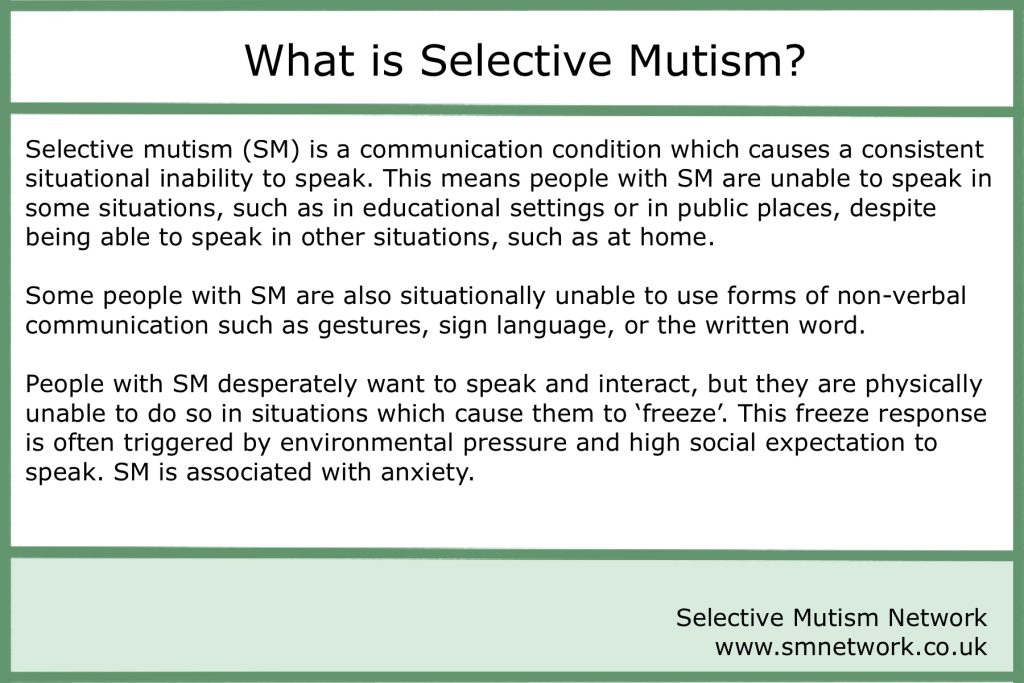
Selective mutism (SM) is a communication condition.
All people with SM experience a consistent and persistent situational inability to speak. This means those with SM find it impossible to speak in certain contexts, such as in educational settings or in public places, despite maintaining the ability to speak in other contexts, such as at home with close family. However, the precise contexts in which speech is impossible varies.
Many people with SM also experience situational inability to use forms of non-verbal communication. This might include difficulty using gestures, sign language(s), and/or the written word. However, not all people with the condition experience non-verbal communication barriers.
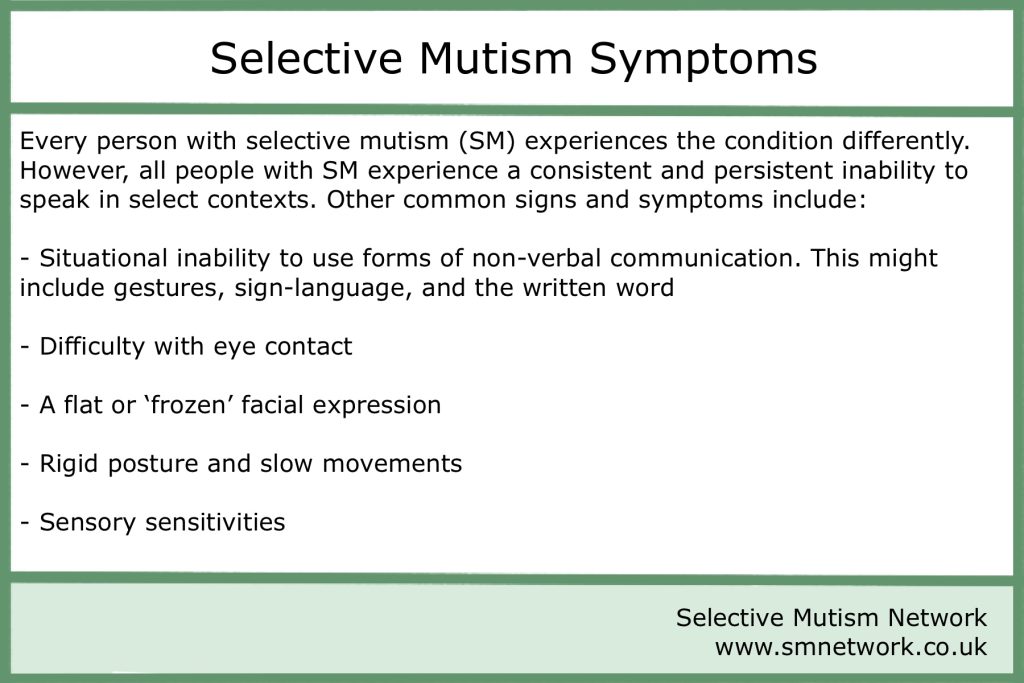
There are a range of other common signs and symptoms of SM. These include:
- Difficulty with eye contact
- A flat or ‘frozen’ facial expression
- Sensory processing difficulties
- Auditory processing difficulties
- A rigid posture with stiff movements and poor co-ordination
Research suggests there are also a range of positive traits people with SM often share in common. These include:
- Being creatively and artistically inclined
- Possessing strong empathy
- Having keen observational skills
Although SM usually becomes apparent during early childhood, it can become apparent later in life. SM affects people across the lifespan and across all genders. However, the condition seems to be more prevalent amongst girls and women.
It is not known what causes SM. However, it is widely accepted SM symptoms are triggered when there is high expectation to speak. Social pressure to communicate causes people with SM to ‘freeze’. This social pressure can be rendered from overt direct demand for communication or by means of indirect subtle social norms. Direct and indirect pressure can emanate from the individual with SM themselves and/or from people around them. There is a correlation between SM and anxiety.
An array of support and treatment initiatives for SM exist. These are improving as research efforts are progressing. In the UK, most support is delivered by accredited speech and language therapists (SLTs) who have expertise in SM. Other collaborative support may be offered by educational psychologists, counsellors, and occupational therapists. The support offered is tailored to each individual but often centres around:
- Small-steps programmes for gradually lowering the intensity of the ‘freeze’ response
- Environmental support (training people in the environment(s) about SM; implementing reasonable adjustments; sensory integration support)
- Empowerment and self-esteem support
Early recognition of SM is a key factor for enabling a person with SM to flourish. However, late recognition does not mean hope is lost. With the right support, understanding, and acceptance – provided at any age or stage – people with SM can go on to lead high quality and fulfilling lives.
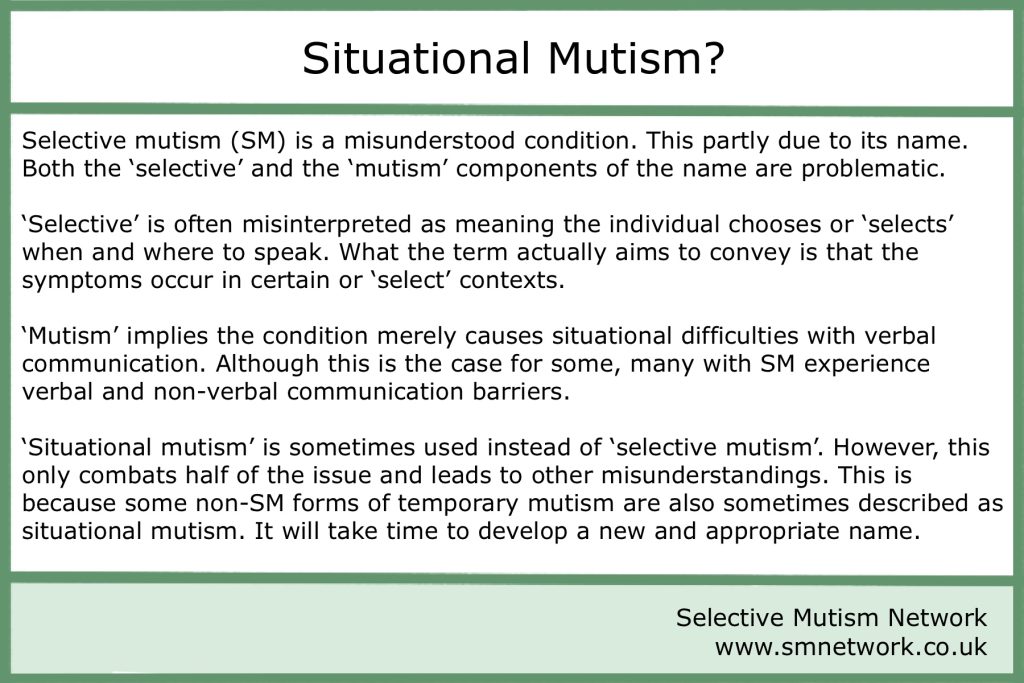
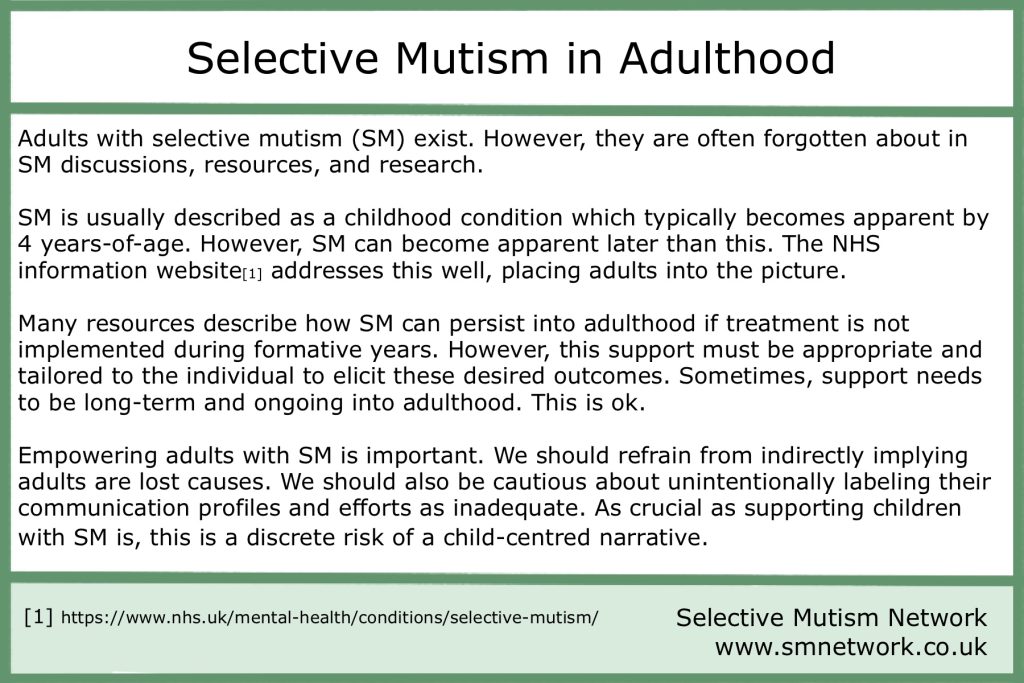
On this page you can find short informational cards which address and discuss SM topics. This collection will grow as the Selective Mutism Network develops new resources.
Click the ‘download’ buttons to save these informational cards for your own personal use.
SM Informational Cards